What should you do during an earthquake in Japan?
Simple actions at home, in a hotel, on the street and near the coast—including when tsunami evacuation comes first.
A JISHINDESU editorial guide based on the cited official and primary materials. It does not replace official safety information.
On this page
First protect yourself from falling objects
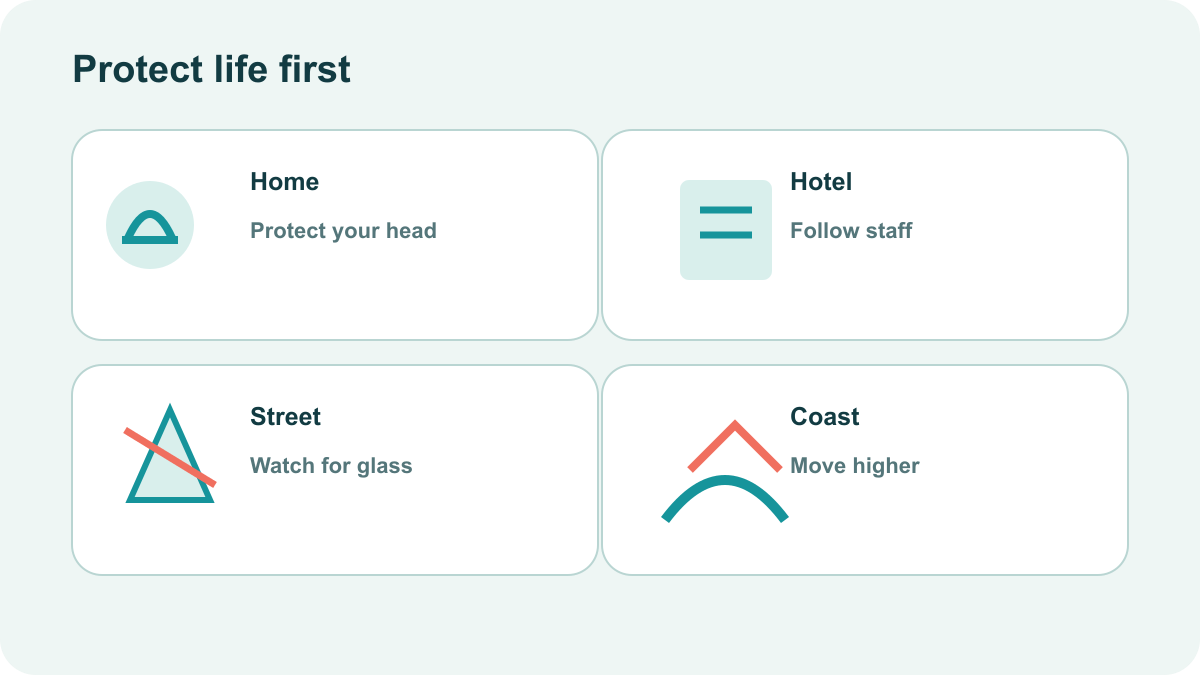
When strong shaking begins, do not immediately run across the room. Move away from windows, tall furniture and objects that may fall. Get low and protect your head. If a sturdy table is beside you, shelter underneath it.
Do not force your way to a cooker during strong shaking. Turn it off calmly after the motion stops if it is safe. Do not use a lift.
In a hotel, follow staff and know the exit route
In your room, protect your head and stay away from glass. Put on shoes after the shaking because broken pieces may cover the floor. Use stairs if staff order an evacuation.
Before an earthquake, check the evacuation plan on the door and locate the stairs. Do not return for luggage when the building is being evacuated.
On the street, watch for glass, signs and walls
Move away from facades, windows, vending machines, block walls and objects that may fall. Do not rush blindly into traffic. Cover your head and reach an open area only when the route is safe.
On a train or bus, hold a rail and follow staff. In a car, do not brake suddenly; slow down and stop safely for the road conditions.
Near the coast, include tsunami risk
After strong shaking, or weaker but long and slow swaying, leave the coast and move to higher ground or a designated tsunami evacuation building. Do not wait for JISHINDESU or confirmation from friends.
Evacuate after an official tsunami warning even if you did not feel shaking. Do not return to the water or shore while warnings or advisories remain in force; a tsunami advisory also requires leaving the water and moving away from the shore.
After shaking, check your surroundings and official information
See whether anyone needs help, but do not enter visibly damaged places. Prepare for more shaking. If networks are busy, limit voice calls and use the family contact method agreed in advance.
Follow JMA, local authorities and staff. JISHINDESU helps explain readings after an event; it does not replace safety instructions.
- Protect your head and move away from falling hazards.
- Do not use lifts or rush for an exit during strong shaking.
- Near the coast, move higher after strong shaking or weaker but long and slow swaying.
- Use official information after the event.